
Gear Manufacturing
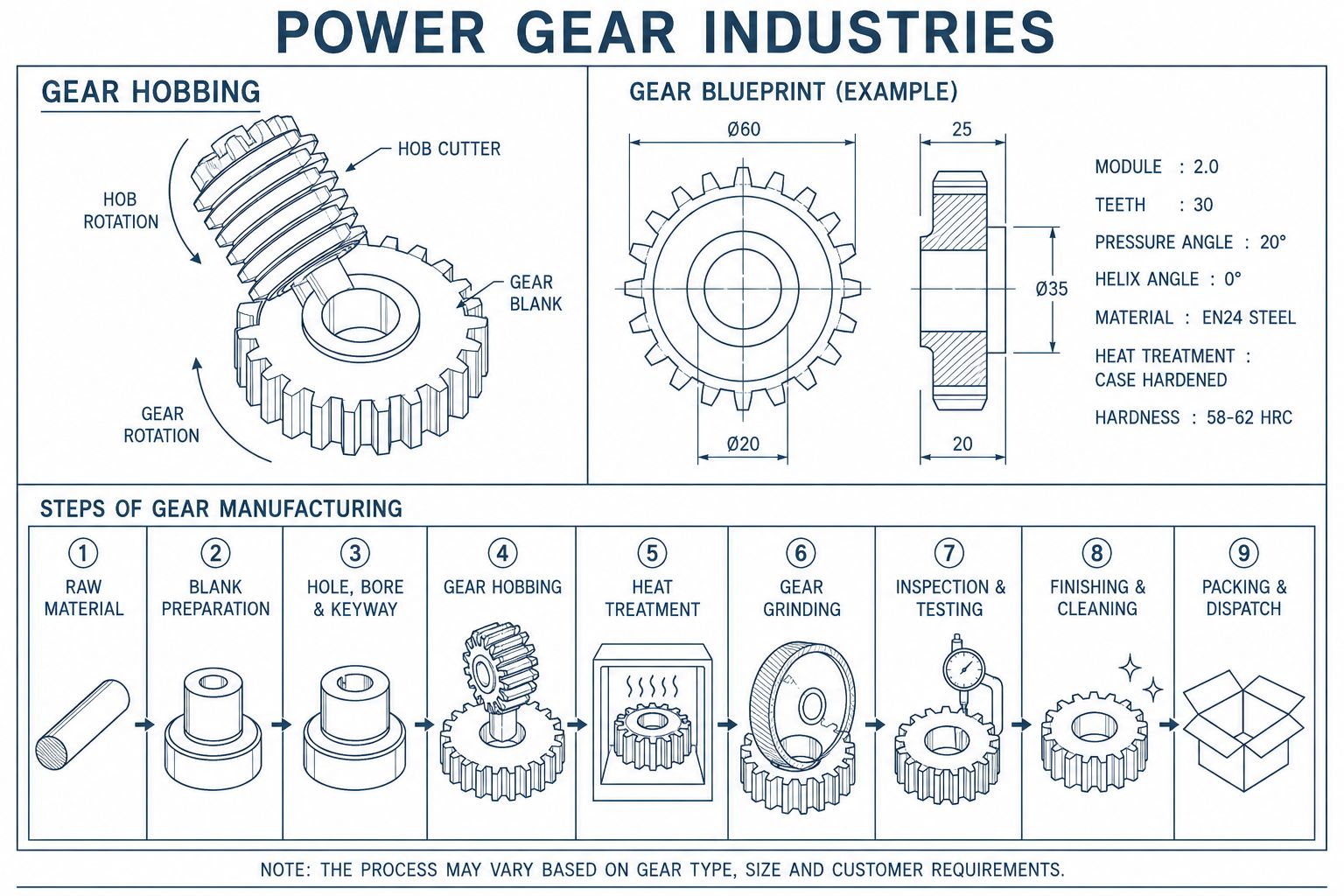
Step-by-Step Quality Gear Manufacturing Process — from sample or drawing to final delivery, built to meet or exceed OEM specifications.
We begin by reviewing the original gear sample, drawing, OEM print, or customer specifications to understand the required dimensions, material, hardness, tooth profile, and application.
If a sample gear is provided, we reverse engineer it by measuring outside diameter, bore, keyway, face width, pressure angle, pitch, tooth count, helix angle, and wear pattern. If a drawing is provided, we verify all critical dimensions before manufacturing.
The proper gear material is selected based on application, load, speed, and environment. Materials may include alloy steel, stainless steel, bronze, cast iron, or other customer-specified materials.
The gear blank is machined to size, including the bore, hub, face width, keyway, splines, and all required mounting features.
Gear teeth are cut using the correct process — hobbing, shaping, milling, broaching, or other precision machining methods — depending on gear type and specifications.
When required, gears are heat treated, carburized, induction hardened, nitrided, or through-hardened to meet the proper hardness and durability requirements.
After heat treatment, gears are precision ground to improve tooth accuracy, surface finish, contact pattern, noise level, and operating life.
Each gear is inspected for tooth profile, lead, pitch, runout, bore size, keyway, hardness, backlash requirements, and surface finish. Contact pattern and gear mesh are also verified when mating gears are available.
All gears are deburred, cleaned, polished where required, and prepared for final assembly or shipment.
A final inspection report can be provided showing critical dimensions, hardness verification, and all quality checks completed.
The completed gear is protected, packaged, and delivered ready for installation.